Coolidge Middle School Principal Appointment


Superintendent of Schools John Doherty is pleased to announce that Sarah Marchant has been appointed as the Principal of Coolidge Middle School, effective immediately.  Over the past several months, Sarah has provided very solid leadership in her role as Interim Principal for Coolidge Middle School.  She has managed and addressed situations effectively and professionally with a continued focus on student needs.  In addition, she has worked diligently with teachers, parents, and the community to provide a high quality educational experience for all students.   


Please join us in wishing Sarah Marchant the very best as she continues her fine work as the Principal at the Arthur W. Coolidge Middle School.


School Committee Meeting on January 13

There will be a School Committee Meeting on Monday, January 13th at 7:00 p.m. in the Reading Public Schools Administrative Offices.  You can access the School Committee Packet here.

The highlights of the meeting are as follows:

1.  Discussion and Approval of the 2014-15 School Calendar

2.  Second Reading of Policy IMDA-Accommodations for Religious and Ethnic Observances

3.  Middle School/High School Math Presentation

There will be office hours from 6:30-7:00 P.M.

Superintendent’s Recommended FY15 Budget

I am pleased to present the FY2015 Superintendent’s Recommended Budget of $40,603,540 representing an increase of $1,902,175 or 4.92%.  You can access the complete budget at this link.  This budget was developed with significant input from district and school administrators, staff, and the school community.  The majority of this rather significant funding increase primarily addresses just two priorities:

  • Aligning pay scales for school employees (including substitute teachers) with comparable school districts in Massachusetts to ensure that we continue to attract, recruit, and retain highly qualified and effective personnel
  • Providing sufficient resources to ensure that our high needs populations are appropriately placed and supported in special education and other specialized programs either within or outside of the district

Funding that remains within the base budget will be used to continue several strategic initiatives that have been and are continuing to be implemented in our schools including:

  • Implementing the Literacy and Mathematics Massachusetts Curriculum Frameworks,, Educator Evaluation System, and District Determined and Local Measures of Student Success
  • Addressing the academic, social, and emotional needs of all students through the implementation of the Massachusetts Tiered System of Support

Our base budget also allows us to continue maintaining our low class sizes (18-22) in Kindergarten through Grade 2 where possible, our middle school interdisciplinary model, our 21st Century learning initiatives including use of mobile learning devices, our behavioral health initiatives, our technology infrastructure, all of our regular day programs, and our school facilities.

While the requested funding allows us to address many of the priorities which reflect the community’s desire to continue a long-standing tradition of excellence in our schools, financial constraints limit our ability to pursue many of the innovative programs, structures, and systems that we believe will make our students even more successful.  Our school district is one of the most efficient districts in the Commonwealth when it comes to spending.  Our academic achievement ranks in the top quartile of the state while our per pupil spending ranks 305th out of 327 operating districts in the Commonwealth, based on state data from the 2011-12 school year.  This puts us among the lowest 10% of all districts in the state.  While we continue to be proud of our record of efficiency, we must recognize that innovation and excellence require strategic investments that we have been unable to make over the past several years due to financial constraints.

This budget includes funding to address contractual obligations based on the assumption that salary schedules for all bargaining units must be adjusted to ensure that salary and wages are competitive.  In addition, this budget funds both known and anticipated special education needs, which are rather significant in the year ahead.  This budget also includes the continued funding of a five to six year technology replenishment cycle adopted in Fiscal Year 2013, and investments necessary for effective implementation of the Massachusetts Curriculum Frameworks, Educator Evaluation, and the Tiered System of Student Support.  We also continue our increased reliance on district revenue offsets while maintaining conservative assumptions regarding state and federal grant revenues in light of the continuing uncertainty regarding the impacts of federal sequestration.  Not included in this budget are funds for extraordinary increases in water and sewer or electricity rates or unanticipated enrollment increases.

As in years past, there are a significant number of important needs that were identified by building administrators, staff, and the school community that were not addressed in this budget in light of fiscal constraints.  These needs are identified below.

Unfunded FY’15 Budget Requests

Identified Need

Budgetary Impact

School adjustment counselors at the elementary and middle levels to providing more counseling to struggling students who need targeted social, emotional, and behavioral supports to succeed

2.0 FTE

$130,000

Tier 2 academic, social and emotional supports at all levels (e.g. general education tutors, staff trained in applied behavior analysis)

3.0 FTE

$60,000

Additional special education staff to address the growing teaching and administrative demands on teachers, the increasing complexity of the needs with which students are presenting, the pervasive and growing proficiency gap between special education and general education students, and the need to provide for more inclusive settings throughout the district

3.0 FTE

$195,000

Additional time for paraeducators to collaborate with teachers, serve as a teacher resource, learn how to modify curriculum and implement accommodations, and take advantage of professional development opportunities (two hours per week for instructional paraeducators)

$115,000

Additional funding for professional development for staff, particularly in the area of behavioral health, tiered systems of support, and effective use of data and technology

$50,000

Instructional coaches to model effective teaching practices for staff and to help implement the new Massachusetts curriculum frameworks particularly in the areas of math and literacy

2.0 FTE

$130,000

Additional time for teachers to collaborate, learn, and grow in their professional practice (to be accomplished through additional funding for substitutes during the school day or time beyond the school day for collaboration)

$30,000

Instructional technology specialist at the elementary level (currently five schools share one full-time specialist)

1.0 FTE

$65,000

Additional technology maintenance staff to service the increased amount of technology employed throughout the district

1.0 FTE

$40,000

Data or information management specialist to assist administrators and teachers in managing, monitoring, reporting, and analyzing all of the educational data available to districts and schools

1.0 FTE

$50,000

Districtwide technology leadership position to lead and manage the day to day operations of our technology and data rich 21st century learning and teaching environment

1.0 FTE

$95,000

Increased funding for technology maintenance and replenishment

$50,000

Additional general maintenance staff for facilities department

1.0 FTE

$50,000

Additional funding to allow for planned painting cycle of 15-20% of classrooms per building per year

$120,000

TOTAL BUDGETARY IMPACT

$1,180,000

If all of the above had been added to the requested FY2015 budget, the increase would have been $3.08 million (a 7.96% increase) rather than the $1.9 million increase proposed.

The FY’15 Superintendent’s Recommended Budget will be presented to the Reading School Committee.  Following their deliberations and vote, the budget is then transmitted to the Town Manager who combines the municipal and school budget into one budget that must be balanced.  All budgets are then reviewed by the Finance Committee of the Town who votes as to whether to refer the budget as is to Town Meeting or refer with changes.  Town Meeting then has final approval authority.  By statute, Town Meeting can only vote the “bottom line” of the School Committee budget.  It may vote to increase or reduce the total dollar value but it cannot specify the line item to which the increase or decrease is to be made.

The timeline for the next steps in the budget development process is summarized below.

FY’15 Superintendent’s Recommended Budget Presentation

January 16, 2014-Overview, Administration


FY’15 Superintendent’s Recommended Budget Detail Presentation     

January 21, 2014-Regular Day, Special Education


FY’15 Superintendent’s Recommended Budget Detail Presentation     

January 23, 2014-District-wide Programs, School & Town Facilities


Public Hearing on the FY’15 School Committee Budget                             

January 27, 2014


School Committee Vote on the FY’15 Budget

February 3, 2014


FY’15 School Committee Budget Presentation to Finance Committee  

March 12, 2014


Annual Town Meeting                                                                       

April 28, May 1, May 5, 2014

All School Committee meetings begin at 7:00 p.m. at the Administration Offices of the Reading Public Schools.  Copies of the budget document are available at the Office of the Superintendent, the Reading Town Library, the main office of each school, and on the Reading Public School’s website at www.reading.k12.ma.us.  For additional information or clarification, please feel free to contact the Central Office Administration for assistance.

Special thanks goes out to Assistant Superintendent Mary DeLai and School Business Assistant Martha Sybert for all of their hard work in developing the budget document.

Grade 6-9 Math Informational Parent Meeting (Rescheduled)

GRADE 6-9 MATH:  INFORMATIONAL PARENT MEETING (RESCHEDULED)

This Thursday, January 9th (7:00 p.m.) at Coolidge Middle School, there will be an informational session about secondary mathematics for parents of students currently in Grades 6 through 9.  (This is a rescheduling of the Coolidge meeting that was postponed due to weather.) At the meeting, there will be an overview of the Massachusetts Curriculum Framework, math placement procedures for this year’s 6th graders, and the math options available as students progress through their middle school and high school years.

For your information, the power point presentation is attached.

Math 6-9 Presentation 12-2013 FINALrev

No School on Thursday, January 2nd and Friday, January 3rd

Good Evening,

Due to the impending snowstorm, there will be no school for the Reading Public Schools on Thursday, January 2nd and Friday, January 3rd.


A.L.I.C.E. Update

Over the last several months, the Reading Public Schools has been working with the Reading Police Department to implement an enhanced lockdown procedure called A.L.I.C.E., which is an acronym for Alert, Lockdown, Inform, Counter, and Evacuate.  The philosophy of A.L.I.C.E. is to use technology and information in a way that staff and students can make informed decisions in a crisis, remove as many people as possible from a dangerous situation, and provide realistic training so that those involved in a crisis have a better chance of surviving. A copy of the presentation that was given to the parent community in October is located at:

http://www.edline.net/pages/ReadingPublicSchools/News/ALICE_Presentation_to_the_Comm .

As part of this implementation process, we will be conducting drills at the elementary, middle, and high school levels from January through March. The elementary and middle schools will be conducting their drills in January and February, and the high school in March.  These drills will be developmentally appropriate and help prepare students in a way that is similar to drills that we currently conduct in our schools for fire evacuation, lockdown, and shelter in place.  At the elementary level, each classroom teacher will speak with students about the new protocol.  Elementary teachers have been provided with a script that is appropriate for their grade level.  Drills at the elementary school will resemble the more traditional lockdown and fire evacuation drills.  The “counter” strategies will not be presented as part of the elementary student drills.  At the secondary level, the drills will consist of student presentation done in a grade level assembly followed by a school-wide simulated drill.  The training and drills may be conducted on separate days and will include the participation of Reading Police and Fire personnel. In addition, students will have the opportunity to discuss their reactions to the presentation and drill in classrooms with their teachers. .  Details surrounding the specific training and drill dates for your child’s school will be communicated by your building principal and you should feel free to communicate directly with your principal regarding any concerns that you have around how the drill may impact your child.

Please note that we will be having another community presentation on Monday, January 6th at 7:00 p.m. at the Birch Meadow Elementary School Cafeteria.  This presentation will be very similar to the presentation given in October.  Members of the Reading Police Department and Reading Public Schools District Safety Committee will be present to answer and questions that parents may have about the process.

If you have any questions, please do not hesitate to contact your child’s building principal.

Notification of Coordinated Program Review

Superintendent of Reading Public Schools, John F. Doherty was recently informed by the Commissioner of Elementary and Secondary Education of an upcoming Department of Elementary and Secondary Education Coordinated Program Review (CPR).

As part of this Coordinated Program Review, Department staff will visit the district during the week of February 10th – 14th.  Such visits are routinely conducted by the Department to satisfy federal and state requirements for the periodic review of specific education programs and services in schools throughout the Commonwealth.  The Department is reviewing several programs during their visit. 

The review will address the following programs: Special Education, English Language Learner Education, and Civil Rights.  After reviewing school district procedures for these programs, a Department team will make its onsite visit, during which it will review individual student records, interview administrators, teachers and parents, and observe instructional sites.  After the onsite visit, the department will prepare a report for the Superintendent and School Committee with detailed findings for each program. 

Using a scale of ratings ranging from “Commendable” to “Not Implemented,” the report will rate the implementation of each requirement reviewed by the department.  Where requirements are found not implemented or partially implemented, the district must propose to the Department corrective action to bring those areas into compliance regulations.  Districts and schools are encouraged to incorporate corrective action into their district and school improvement plans and professional development plan.  The school district will be provided with technical assistance from the Department in developing a corrective action plan. 

Both the Department’s report and the corrective action plan are public information and will be available to the public upon request.  Program Review Final Reports are also available on the Department’s website at http://www.doe.mass.edu/pqa/review/cpr/reports/ .

Any member of the public may request to be interviewed by telephone by a member of the Department’s visiting team.  Those wishing to be interviewed should call the Superintendent’s office at (781) 944-5800 no later than January 17th to leave their name and phone number or they may call the Department of Elementary and Secondary Education at (781) 338 – 3700. 

A member of the visiting team will contact each person desiring an interview within two weeks after the completion of the onsite visit.  If an individual is not comfortable communicating in English or requires some other accommodation, the Department will make arrangements to communicate appropriately with the individual. 

The Reading Public School District is committed to ensuring that all of its programs and facilities are accessible to all members of the public. 

Photos from the Week Before Vacation

The week before the Holiday break was a time for concerts, performances, and community service in the Reading Public Schools. There are several photos below which capture some, but not all of the events that happened before the break. A special thanks goes out to all of the students and their teachers who contributed to those events.

Image

Image

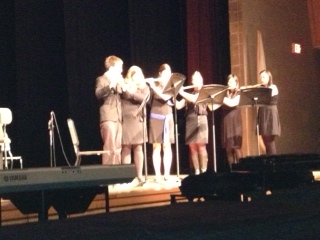
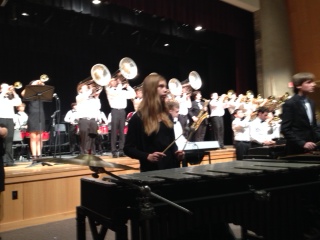
In the photos above, the RMHS Flute Quartet and the RMHS Marching Band perform at the annual Winter Holiday Concert.

Image

In the photo above. Students in RISE Preschool Teacher Joyce Camenker’s class singing some Holiday tunes just before vacation.

Image

Image

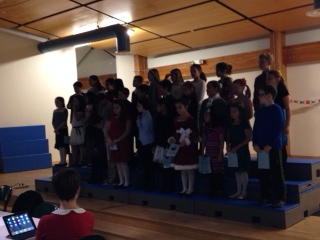
In the two above photos, students performing at the annual RMHS Winter Choral Concert.

Image

Wood End Chorus performing at the December 16, 2013 School Committee Meeting

Image

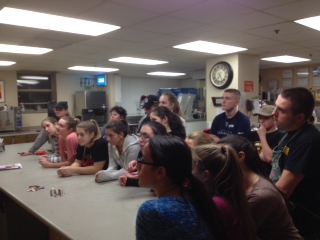
Members of the RMHS Interact Club, the youth branch of Reading Rotary, cooking and serving meals at Rosie’s Place, a homeless shelter in Boston for women and children.

Elementary Space Study Summary Updated

The information below has been updated from the previous blog post to reflect the July 23rd School Committee Meeting discussion.

The summary below gives some background information surrounding the Elementary Space Study review, the need to conduct the study, and the reason why additional space may be needed for future programmatic changes at the elementary level.

What is the background for the Elementary Space Study?

Over the last month, the Reading School Committee has been reviewing an Elementary Space Study report which was completed in May, 2012 by Frank Locker Educational Planning Consultants.  The purpose of the study was to evaluate the educational adequacy of space at the pre-school and elementary schools, and to outline the short term and long term options to serve the elementary students.   A copy of the report and the backup information is found at the following Edline link: 

http://www.edline.net/files/_eGGi5_/7c8c612cf807d6443745a49013852ec4/SC_MEETING_7.9.12.pdf

This report was initiated in November, 2011 as a proactive way of looking at our growing space needs at the Elementary level due to programmatic changes.  These program issues and the need for additional space related to the program needs first began to be discussed in March, 2011, when Superintendent John Doherty presented to the Reading School Committee the results of his transition plan for the School District.  The Superintendent’s Transition plan was developed over an eight month period with feedback collected from interviews and surveys of hundreds of community members, parents, teachers and students, and the review of several School Department documents.  As a result of those findings, The Superintendent developed a multi-year plan called The Reading Public Schools Strategy for Improvement of Student Outcomes.  This plan has become the blueprint for initiatives that the district is exploring and will be implementing over the next three years as a way to improve the Reading Public Schools.  The district is currently implementing several of the initiatives in the plan including developing a Behavioral Health Task Force, Piloting a Bring Your Own Device (BYOD) initiative for grades 7-12, and piloting the Elementary Standards-Based Report Card.  A review of our current elementary space needs and the development of a plan to address future needs was included as part of that plan.

Why do we need additional classroom space at the Elementary School level?

One of the areas that was a concern for elementary families who were interviewed during the Transition Plan development was the need to provide additional programs at the pre-school and elementary school levels, most notably, offering Full Day Kindergarten for all students and expanding the RISE Pre-School program.  According to the Massachusetts Department of Elementary and Secondary Education (2011), 201 out of 328 Massachusetts school districts that offer kindergarten offer free full day kindergarten for all of their students.  Currently, the Reading Public Schools offer a tuition-based full day kindergarten program for 60% of our students and our RISE preschool program has grown significantly over the last several years.  However, in order for the district to continue to expand these programs and continue to improve the quality of these programs, additional classroom space will be required.  For the 2012-13 school year, the Reading Public Schools will not have any additional classroom space at the elementary level for further expansion of programs.  The reason for this is since the 2005-06 school year, which is the first year that we had five elementary schools operating in our district, we have increased classroom space needs in the following programmatic areas:

1.  Full Day Kindergarten-Due to the increased demand by families for Full Day Kindergarten, we have increased the number of classrooms designated for Full Day Kindergarten from 5 in 2005-06 to 9 in this upcoming school year.  The number of full day students during that time has increased from 92 students in 2004-05 to 182 students in 2012-13. 

2.  Special Education In District Programs-Over the last several years, we have developed strong in-district special education programs to address the needs of our students.  These programs allow our Reading students to stay in the school district with their peers, instead of being assigned to an out of district placement for an additional cost to the operating budget.  During the 2005-06 school year, we had one elementary special education program classroom in the district.  In the 2012-13 school year, we will have 6 classrooms at the elementary level dedicated to special education programs in the district.

3.  Maintain adequate class size-It has been the guidelines of the Reading Public Schools over the last few years to maintain Grade K-2 class sizes of 18-22 students and Grade 3-5 classrooms in the mid-20’s.  When classroom space is not available, class sizes will increase when additional students enroll in that grade.  Over the last two years, we have been able to re-assign students who move in to Reading from their home district as a way to balance class sizes across a grade level.  We have also attempted to keep cohorts of kindergarten students together geographically to start their entry in the Reading Public Schools with balanced class sizes. 

4RISE Pre-School Program-Over the last 7 years, we have seen an increase of 3 and 4 year old students that have been identified for Special Education services.  This has increased our RISE pre-school population from 72 students in the 2005-06 school year to 127 students at the end of the 2011-12 school year.  For the 2012-13 school year, we will have 7 classrooms for the RISE Preschool, an increase of 2 classrooms since 2005-06.  Next year, we will not be able to accommodate all of the students at the RISE Pre-School, so we will be using 1.5 classrooms at Wood End.

5.  Dedicated Art and Music Classrooms-When Barrows was renovated and Wood End was built in 2005, the School District was committed to provide dedicated art and music classrooms at each elementary school so that art and music would no longer have to be taught with the teacher moving from classroom to classroom on a cart.  Teaching the art and music programs in a dedicated classroom allow for more hands-on learning experiences for the students.  At times over the last few years, due to classroom space needs in other areas, we have had to combine art and music classrooms in some of our elementary schools.  Next year, three of our schools will have dedicated art and music classrooms, and two will have a combined art and music classroom. 

Is the additional space needed created by an increase in enrollment?

In the Elementary Space Study conducted by Frank Locker, there are two enrollment projections that are included; a moderate enrollment projection which shows a slight increase over the next several years and a high enrollment projection, which indicates an enrollment issues at some of the elementary schools over the next several years.

In our analysis of space needs, we are assuming the moderate enrollment projection, not the high enrollment projection.  Currently, the elementary enrollment for the 2012-13 school year is consistent with the 2011-12 school year elementary enrollment. The need for additional space is based on the programmatic issues described above and not a significant increase in enrollment.

Will we see an increase in Chapter 70 funding or other grant funding if we move forward with Full Day Kindergarten for all students?

If the Reading Public Schools commits to providing free full day kindergarten for all students, there will be an increase in Chapter 70 funding due to the fact that all kindergarten students will count in the formula as full day students.  Currently, any half day kindergarten student or any full day kindergarten student that pays tuition is only counted as a half day student in the Chapter 70 formula.  For example, if we implemented free full day kindergarten this year, with 320 students, the Chapter 70 funding for FY14 would increase approximately 1.1 million dollars.  This amount would offset the expenses associated with hiring additional staff to implement full day kindergarten for all students.

There are also transitional grants provided by the DESE for communities who are transitioning from half day programs to full day programs.  If Reading qualified, we could receive up to $200,000 over a two year period.

What are the next steps?

The Reading School Committee has met on June 11, July 9, and July 23 to discuss the contents of the report and to explore additional information on Full Day Kindergarten, Pre-School, Special Education Programs, dedicated Art and Music classrooms and future expansion of these programs.  Members of the Board of Selectmen and the Finance Committee attended the June 11th meeting.  At a future School Committee meeting, the School Committee will direct the Administration to move forward with some of the programmatic issues that are being discussed, as well as, a classroom space plan.

Will there be additional public meetings on this issue?

The Reading School Committee will continue to discuss this topic at the August 27th meeting, which will begin at 7:30 p.m. in the School Committee Conference Room at the Reading Administrative Offices.  An additional meeting is being planned in late August in continue this discussion.  We encourage all who are interested to attend. 

Elementary Space Study Update

Elementary Space Study Review Summary

The summary below gives some background information surrounding the Elementary Space Study review, the need to conduct the study, and the reason why additional space may be needed for future programmatic changes at the elementary level.

What is the background for the Elementary Space Study?

Over the last month, the Reading School Committee has been reviewing an Elementary Space Study report which was completed in May, 2012 by Frank Locker Educational Planning Consultants.  This report was initiated in November, 2011 as a proactive way of looking at our growing space needs at the Elementary level due to programmatic changes.  These program issues and the need for additional space related to the program needs first began to be discussed in March, 2011, when Superintendent John Doherty presented to the Reading School Committee the results of his transition plan for the School District.  The Superintendent’s Transition plan was developed over an eight month period with feedback collected from interviews and surveys of hundreds of community members, parents, teachers and students, and the review of several School Department documents.  As a result of those findings, The Superintendent developed a multi-year plan called The Reading Public Schools Strategy for Improvement of Student Outcomes.  This plan has become the blueprint for initiatives that the district is exploring and will be implementing over the next three years as a way to improve the Reading Public Schools.  The district is currently implementing several of the initiatives in the plan including developing a Behavioral Health Task Force, Piloting a Bring Your Own Device (BYOD) initiative for grades 7-12, and piloting the Elementary Standards-Based Report Card.  A review of our current elementary space needs and the development of a plan to address future needs was included as part of that plan.

Why do we need additional classroom space at the Elementary School level?

One of the areas that was a concern for elementary families who were interviewed during the Transition Plan development was the need to provide additional programs at the pre-school and elementary school levels, most notably, offering Full Day Kindergarten for all students and expanding the RISE Pre-School program.  According to the Massachusetts Department of Elementary and Secondary Education (2011), 201 out of 328 Massachusetts school districts that offer kindergarten offer free full day kindergarten for all of their students.  Currently, the Reading Public Schools offer a tuition-based full day kindergarten program for 60% of our students and our RISE preschool program has grown significantly over the last several years.  However, in order for the district to continue to expand these programs and continue to improve the quality of these programs, additional classroom space will be required.  For the 2012-13 school year, the Reading Public Schools will not have any additional classroom space at the elementary level for further expansion of programs.  The reason for this is since the 2005-06 school year, which is the first year that we had five elementary schools operating in our district, we have increased classroom space needs in the following programmatic areas:

1.  Full Day Kindergarten-Due to the increased demand by families for Full Day Kindergarten, we have increased the number of classrooms designated for Full Day Kindergarten from 5 in 2005-06 to 9 in this upcoming school year.  The number of full day students during that time has increased from 92 students in 2004-05 to 182 students in 2012-13.

2.  Special Education In District Programs-Over the last several years, we have developed strong in-district special education programs to address the needs of our students.  These programs allow our Reading students to stay in the school district with their peers, instead of being assigned to an out of district placement for an additional cost to the operating budget.  During the 2005-06 school year, we had one elementary special education program classroom in the district.  In the 2012-13 school year, we will have 6 classrooms at the elementary level dedicated to special education programs in the district.

3.  Maintain adequate class size-It has been the guidelines of the Reading Public Schools over the last few years to maintain Grade K-2 class sizes of 18-22 students and Grade 3-5 classrooms in the mid-20’s.  When classroom space is not available, class sizes will increase when additional students enroll in that grade.  Over the last two years, we have been able to re-assign students who move in to Reading from their home district as a way to balance class sizes across a grade level.  We have also attempted to keep cohorts of kindergarten students together geographically to start their entry in the Reading Public Schools with balanced class sizes.

4RISE Pre-School Program-Over the last 7 years, we have seen an increase of 3 and 4 year old students that have been identified for Special Education services.  This has increased our RISE pre-school population from 72 students in the 2005-06 school year to 127 students at the end of the 2011-12 school year.  For the 2012-13 school year, we will have 7 classrooms for the RISE Preschool, an increase of 2 classrooms since 2005-06.  Next year, we will not be able to accommodate all of the students at the RISE Pre-School, so we will be using 1.5 classrooms at Wood End.

5.  Dedicated Art and Music Classrooms-When Barrows was renovated and Wood End was built in 2005, the School District was committed to provide dedicated art and music classrooms at each elementary school so that art and music would no longer have to be taught with the teacher moving from classroom to classroom on a cart.  Teaching the art and music programs in a dedicated classroom allow for more hands-on learning experiences for the students.  At times over the last few years, due to classroom space needs in other areas, we have had to combine art and music classrooms in some of our elementary schools.  Next year, three of our schools will have dedicated art and music classrooms, and two will have a combined art and music classroom.

Is the additional space needed created by an increase in enrollment?

In the Elementary Space Study conducted by Frank Locker, there are two enrollment projects that are included; a moderate enrollment projection which shows a slight increase over the next several years and a high enrollment projection, which indicates an enrollment issues at some of the elementary schools over the next several years.

In our analysis of space needs, we are assuming the moderate enrollment projection, not the high enrollment projection.  Currently, the elementary enrollment for the 2012-13 school year is consistent with the 2011-12 school year elementary enrollment. The need for additional space is based on the programmatic issues described above and not a significant increase in enrollment.

What are the next steps?

As a result of the decrease in available classroom space at the elementary level, the Reading School Committee authorized an Elementary Educational Facilities Planning study which was completed by Frank Locker Educational Planning in May, 2012.  The purpose of the study was to evaluate the educational adequacy of space at the pre-school and elementary schools, and to outline the short term and long term options to serve the elementary students.  A copy of the report and the backup information is found at the following link.

The Reading School Committee met on June 11 and July 9 to discuss the contents of the report and to explore additional information on Full Day Kindergarten, Pre-School, Special Education Programs, dedicated Art and Music classrooms and future expansion of these programs.  Members of the Board of Selectmen and the Finance Committee attended the June 11th meeting.  The School Committee asked the administration to provide additional information on this topic for the July 23rd meeting.  At a future School Committee meeting, the School Committee will direct the Administration to move forward with some of the programmatic issues that are being discussed, as well as, a classroom space plan.

Will there be additional public meetings on this issue?

The Reading School Committee will continue to discuss this topic at the July 23rd meeting, which will begin at 7:30 p.m. in the School Committee Conference Room at the Reading Administrative Offices.  We encourage all who are interested to attend.