Beginning this week, Superintendent of Schools John Doherty will begin presenting the FY17 Superintendent’s Recommended Budget to the School Committee and the Community. The FY2017 Superintendent’s Recommended Budget is $40,847,667 representing an increase of $1,374,314 or 3.5%. This recommended budget includes the base budget that follows the Reading Finance Committee’s recommended amount of $40,697,667, an increase of 3.25%, plus an additional $150,000 to fund the first year of a three year K-12 science curriculum implementation. The Finance Committee’s recommended guidance is based on an analysis of current and future town revenue and expense projections of the Community, which are restricted by an annual structural revenue deficit, combined with an inadequate Chapter 70 funding formula and minimal state aid funding increases. Unfortunately, due to financial constraints, this budget is not a level service budget, which would have required a 4.89% increase. As a result, the Superintendent’s Recommended FY17 budget is a reduction of $658,193 from a level service budget. In order to reach the 3.25% budget, $658,193 in budget reductions to both personnel and non-personnel areas, combined with offset increases were made. This is the third consecutive year that the level services budget has had to have been reduced. In the FY16 budget (current year), $825,000 was reduced from the level service budget, resulting in a small number of personnel reductions and several non-personnel reductions. Unfortunately, the FY17 recommended budget will result in further personnel reductions.
The base budget attempts to achieve the multi-year goals and priorities of our school system, while staying within the fiscal constraints of our available community resources. As part of this base budget, partial funding was restored from an FY16 budget reduction to add regular education paraeducator hours at each elementary school. In addition, per pupil funding was restored at the FY15 levels for the building based budgets which allow schools to have adequate supplies and materials for the classrooms. Both of these areas were significantly reduced in last year’s budget. Finally, one new position, a social worker has been proposed for the district wide student support program at Killam to support the growing needs of those students.
The Superintendent’s Recommended FY17 budget includes funding to primarily address the following budget drivers:
- All salary and benefit obligations to employees per the collective bargaining agreement
- Non-union salary and benefit increases in line with COLA adjustments for collective bargaining units
- Anticipated increases in regular day mandatory transportation (For students in Grades K-6 who live over 2 miles from their school) and special education transportation. We are currently in the final year of both bus transportation contracts.
- Anticipated increases in known out of district special education tuition increases.
Not included in this budget are funds for unanticipated enrollment increases or unanticipated special education costs related to out of district placement tuition, transportation, or other services as required by a student’s individualized education plan. In addition, as agreed upon by Town Meeting in November, 2015, the Town and School facilities budgets have now been transferred to a new budget line item called Town Core Facilities, which will be jointly voted on by the Reading School Committee and the Reading Board of Selectmen. This will be discussed more in the School Building Maintenance section of this budget book.
In addition to the above budget drivers, funding remains within the Superintendent’s Recommended budget and other sources to continue several critical strategic initiatives that have been and are continuing to be implemented in our schools including:
- Implementing the Literacy, Mathematics, and Science Massachusetts Curriculum Frameworks, which includes research based practices in curriculum, instruction, and assessment.
- Continuing to build the capacity of our professional staff through research based job embedded professional development and professional learning communities.
- Addressing the academic, social, and emotional needs of all students through the implementation of the Multi- Tiered System of Support.
In addition, our base budget also allows us to continue maintaining recommended class sizes (18-22) in Kindergarten through Grade 2, the middle school interdisciplinary model, our behavioral health initiatives, our technology infrastructure and the adequate cleaning of our school facilities. Unfortunately, because of budget reductions, this recommended budget does not fully support all of the regular day programs from the previous school year and, as a result, a few programs will be eliminated or reduced.
Budget Reductions/Offset Increases
Unfortunately, in order to reach the Finance Committee budget guidance, several reductions in personnel will need to be made. These reductions will have an impact at all three levels in a variety of ways, including higher class sizes, reduction or elimination of a few programs, and reduced services to students. Although we do not support any reductions in personnel, we identified reductions that have less of an impact on student learning than other reductions. To reach a balanced budget that is below level service, the following program reductions, offset increases, and/or personnel reductions were included in the Superintendent’s FY17 Recommended Budget:
Figure A: FY17 Budget Reductions/Offset Increases
| Cost Center |
Area |
Amount |
| Regular Day |
2.0 Elementary Teachers |
$110,000 Reduction |
| Regular Day |
3.4 High School Teachers |
$199,000 Reduction |
| Regular Day |
High School Stipends |
$9,693 Reduction |
| Regular Day |
.5 Middle School Teacher |
$42,000 Reduction |
| Regular Day |
1.0 High School Regular Education Paraeducator |
$23,000 Reduction |
| Special Education |
.4 Speech and Language Pathologist |
$20,000 Reduction |
| Special Education |
1 Out of District Placement with Transportation |
$55,800 Reduction |
| Various Cost Centers |
Miscellaneous Reductions |
$32,000 Reduction |
| Revolving Account |
Extended Day |
$90,000 Increase in Offset |
| Revolving Account |
Full Day Kindergarten |
$30,000 Increase in Offset |
| Revolving Account |
Special Education Tuition |
$15,000 Increase in Offset |
| Revolving Account |
Athletics |
$16,700 Increase in Offset |
| Revolving Account |
Extracurricular |
$5,000 Increase in Offset |
The reduction of 2.0 FTE Elementary teachers will result in some class sizes in grades 3-5 to reach 25 students per classroom. The 3.4 FTE High School Teachers will result in the elimination of the Freshmen Advisory Program, as well as reductions in the High School Latin Program. The reduction in High School stipends will result in the elimination of a High School Department Head, the consolidation of two departments, and the elimination of another leadership position. The elimination of a Department Head will result in a savings of a .4 FTE teacher (included in the 3.4 FTE High School Reduction) because of the reduced teaching load that a Department Head has. The .5 Middle School Teacher will result in reduced reading services for some middle school students. The 1.0 FTE Regular Education Paraeducator will eliminate the Library Paraeducator at the High School, resulting in reduced staffing in the High School Library and possible times where the library will not be accessible to students. The .4 Speech and Language Pathologist reduction will result in reduced speech and language services at the elementary level. The reduction in one Special Education Out of District Placement with transportation is for an anticipated special education out of district placement. If funding is necessary for an additional out of district placement during the 2016-17 school year, we may need to request additional funding for this line item either with the Finance Committee or at Town Meeting.
In addition, there are several recommended increases to revolving account offsets which are based upon an analysis over the last year in revolving fund accounts. The increase in the Extended Day offset is to support one hour of custodial cleaning each school day for the Extended Day and After School programs. The increase in the Full Day Kindergarten offset is consistent with the increase of students who are participating in the tuition-based Full Day Kindergarten. The increase in the Special Education Tuition Revolving account is based on last year’s analysis and an anticipated increase in an additional student being enrolled to one of our special education programs from another school district. The increase in the Athletics and Extra-curricular offsets is due to the increase in user fees from last year which has not resulted in a decrease in participation.
Other Resources Needed
In May and June, 2015, the Superintendent of Schools held a series of community and school interactive forums to identify answers to the following four questions:
- What areas are strengths of the Reading Public Schools and you would like to see continued?
- What areas in our school district need to be strengthened?
- What new programs or initiatives would you like to see started?
- What current program or initiatives would you like to see changed or stopped?
Over 300 staff and community members attended the forums. During those forums there were substantive discussions on the strengths of the Reading Public Schools, the areas to strengthen, the new programs or initiatives that we need to begin, as well as, the current programs or initiatives that need to be changed or stopped. Through those discussions hundreds of comments were collected we analyzed the data looking for themes and patterns. In addition, we reviewed additional data from a variety of credible sources including state assessment results, the Walker Institute Report, which is a review of our special education services that was completed last year, staff exit data, the Youth Risk Behavior Survey and student and staff survey data. Based on the feedback gathered at the forums and using other key data, the Superintendent presented a series of recommendations to the Reading School Committee and the Reading Community in a series of presentations during the Fall of 2015. It is evident from the information gathered that in order for Reading to maintain and improve its quality of excellence, additional resources will be needed to improve programs and practices, retain and attract staff, and remain competitive with other area school districts.
Although these additional resources cannot be funded in FY17, additional revenue is going to be needed in future budgets to not only fund an adequate level of services, but to continue to improve our school district.
In addition to the areas that were reduced in this year’s Superintendent’s Recommended budget, a list of additional needs are identified below. Each need, which is linked to one or more of our five district improvement plan goals, would normally be funded in an operating budget and does not include critical capital or facility improvement items that also need to be addressed in the future such as additional classroom space and improved school safety and security. In addition, the amount below does not include the implementation of full day kindergarten for all students, which would have an annual cost of approximately $1,000,000.
Figure 3: Resources Identified to Improve School District But Are Not Funded in FY17 Budget
| Identified Need |
Budgetary Impact |
District Goal Addressed |
| 1.0 FTE Instructional Coach to support science curriculum implementation in Grades K-8 |
$80,000 |
1-Student Learning |
| Complete Science Curriculum Implementation |
$300,000 |
1-Student Learning |
| Upgrade and improve student information management system that will include additional modules to improve communication with parents and improved data analysis. |
$25,000 |
1-Student Learning, 4-Resources and Space, and 5-Communication |
| 5.0 FTE RMHS Teachers to change program offerings, restructure schedule, and change graduation requirements. |
$250,000 |
1-Student Learning |
| 5.0 FTE Elementary Teachers to provide additional art, music, wellness, and other elective classes |
$250,000 |
1-Student Learning |
| 1.0 FTE Elementary Health Educator to provide Health Education Classes in Grades 4 and 5. |
$55,000 |
3-Student Support, Wellness and Safety |
| 2.0 FTE Middle School Health Educators to provide Health Education Classes in Grades 6-8. |
$110,000 |
3-Student Support, Wellness and Safety |
| 2.0 FTE School adjustment counselors at the elementary and middle levels to provide more counseling to struggling students who need targeted social, emotional, and behavioral supports to succeed |
$130,000 |
3-Student Support, Wellness and Safety |
| 8.0 FTE Tier 2 academic, social and emotional supports at all levels (e.g. general education tutors, staff trained in applied behavior analysis) |
$160,000
|
3-Student Support, Wellness and Safety |
| 3.0 FTE Additional special education staff to address the growing teaching and administrative demands on teachers, the increasing complexity of the needs with which students are presenting, the pervasive and growing proficiency gap between special education and general education students, and the need to provide for more inclusive settings throughout the district. Some of this staffing could be obtained as a result of restructuring of existing resources. |
$195,000 |
1-Student Learning and 3-Student Support, Wellness and Safety |
| 3.0 FTE Additional clerical staff to support special education staff so that they can spend more instructional time with students. |
$115,000
|
1-Student Learning and 4-Resources and Space |
| 1.0 FTE Instructional technology specialist at the elementary level (currently five schools share one full-time specialist) |
$65,000 |
1-Student Learning |
| 1.0 Districtwide technology leadership position to lead and manage the day to day operations of our technology and data rich 21st century learning and teaching environment |
$100,000 |
1-Student Learning |
| Increased funding for technology maintenance and replenishment |
$150,000 |
1-Student Learning and 4-Resources and Space |
| TOTAL BUDGETARY IMPACT |
$1,985,000 |
|
If all of the above had been added to the reductions made in the FY17 Superintendent’s Recommended Budget, the increase would have been an additional $2.64 million.
Final Thoughts and Challenges
The Community Forums that were held last spring and fall provided an opportunity to gather feedback on what was working in our school district and what needs to be improved. The data shows that, overall, the community and staff gave positive remarks about the Reading Public Schools. In the focus group sessions, the consistent strengths that emerged include the quality and dedication of our teaching staff and administrators, our students who come to school every day ready to learn, and the commitment that our parents make to our schools. Our data also showed that we have strong special education programs, significant opportunities for our students to participate in extra-curricular activities, athletic programs, and extended field trips, and the access that students have to technology in our district.
In addition, we are also beginning to see some positive downward trends in some of our key Youth Risk Behavior Data, which is based upon a survey that is administered to all Grade 6-12 students every two years. Since 2005, we have seen significant decreases in the use of cigarettes, alcohol, and marijuana. This is a testament to the collaboration and partnership with the Town of Reading, Reading Public Schools, the RCASA, and the Reading Police Department, both from a policy perspective and an implementation and enforcement perspective. In 2005, the use of alcohol by our high school students was at a much higher rate than today. Due to the work of the Board of Selectmen who passed a revised Town Liquor Policy in 2009, the Reading School Committee who passed a revised chemical health policy for students who participate in extra-curricular activities and athletics in 2011, and our Police Department, who began implementing compliance checks and a zero tolerance policy for our youth, we have seen a significant decrease in the use of alcohol by our high school students. This is a concrete example how a collaborative effort of policy changes and implementation can result in a positive benefit for our youth. Although we would like these percentages to be at 0%, the results are showing that our efforts are having an impact.
Although the data and the forums show we have a lot to be proud of in our schools, the information gathered also shows that there are areas we need to address so that we can maintain the level of excellence that we have taken pride in over the last several years. Addressing these areas will be critical to the long term success of our school district.
Our continuing challenge has been to address the achievement gap that exists with our High Needs group consisting of students with disabilities, economically disadvantaged students, and English Language Learner students. Although our recent MCAS and PARCC state assessment scores showed significant progress, Reading is still a level 3 district as designated by the Department of Elementary and Secondary Education. This designation is based upon state assessment scores and has been due to the fact that we have not been able to meet the needs of this group of students as compared with the general population. We are encouraged that the school improvement process that we have been embarking upon for the last two years will provide us with an opportunity to review every aspect of what we are doing at our schools and in our district to effectively address the needs of all our students. Several of the unfunded areas mentioned in Figure 3 above, particularly the ones directly related to our district goal 1 of addressing student learning needs, will help close this achievement gap.
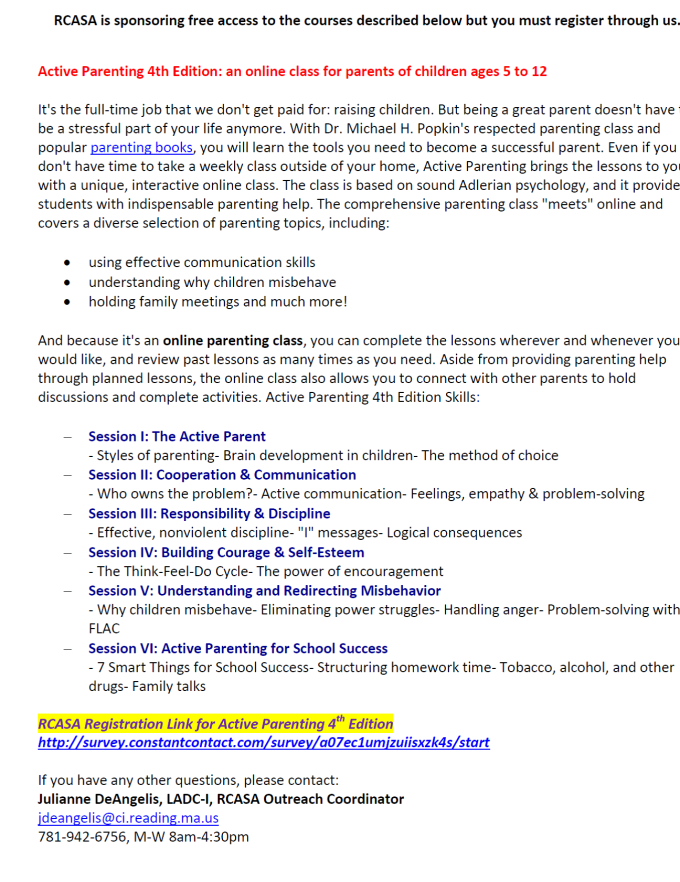
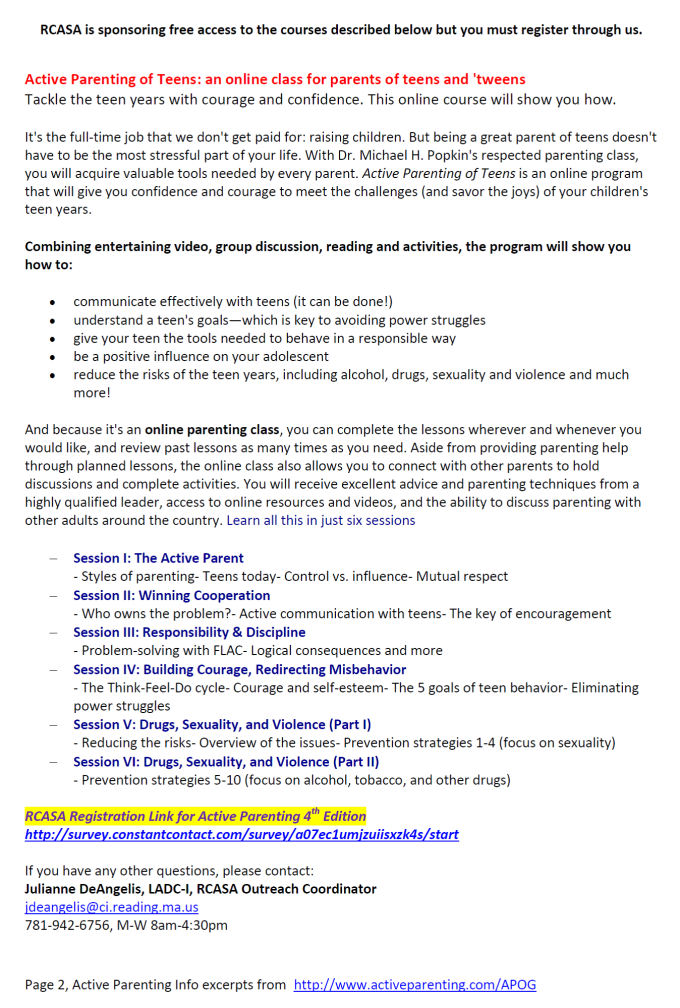
Another area of concern is the overall behavioral and emotional health of our students. As mentioned above, although we have seen some very positive results in the latest administration of the Youth Risk Behavior Survey, we are seeing some troubling trends as well. We have seen slight increases since 2005 in the use of some of the more dangerous drugs, such as prescription medication, heroin, hallucinogens, and inhalants. Synthetic marijuana is emerging as a potent and risky alternative for students. In addition, 24% of our community’s 14-18 year olds stated that they have used electronic cigarettes with nicotine products, also called vaping, which is a dangerous upward trend.
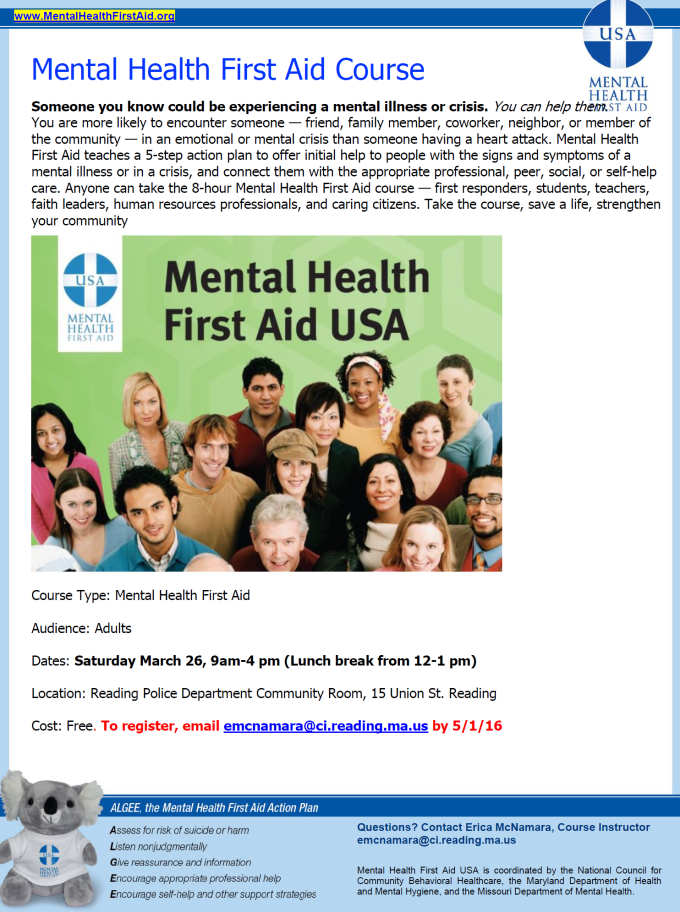
In addition, over the last 10 years, we have seen increases in the percent of teens who have felt sad or hopeless for more than 2 weeks in a row, are involved in non-suicidal self-injury, or have engaged in suicidality. During the 2014-15 school year, 55 RMHS students were hospitalized for anxiety, suicidal tendencies, and/or depression. We have seen increases in this area at our elementary and middle schools as well. Our high school students have indicated on the 2015 YRBS that the major stressors in their life are increased workload, expectations about school and lack of sleep. Although these increases are not isolated just to Reading, we are concerned that the numbers of incidents in Reading is higher than the state average. As a community, we have taken significant steps to address these increased concerns through our partnerships with the Reading Coalition Against Substance Abuse and the Community’s support in previous budgets with programs and staffing that supports behavioral health. In addition, as reported last year, the Town and the School Department received three Federal grants, totaling 1.95 million dollars, to continue to help address the overall behavioral health of our youth. The first grant continues the great work that RCASA has done over the last several years. The second grant will allow the Reading Public Schools to train a minimum of 584 school educators, school support staff, first responders, youth workers, and faith leaders in Youth Mental Health First Aid to identify, understand, and respond to signs of mental illnesses and substance use disorders in our youth. So far, over 300 people have been trained in this area. The third grant will implement a highly sustainable, multi-tiered system of supports to improve school climate and behavioral outcomes for all students. We have made tremendous progress in this area in just one year. These three grants ensure that we will be able to move forward in creating structures, systems, and processes throughout our community to reach and engage all of our youth, particularly those youth who may be vulnerable to risky behaviors such as substance abuse or creating harm to themselves or others. These initiatives, combined with the work that we have done over the last several years in school safety with the Reading Police and Fire Departments, places our community as a leader in proactively addressing the overall safety of our children. As we all know, if students do not feel physically and psychologically safe in school, they will not learn, no matter what curriculum, technology, or teacher you put in front of them. I would like to thank the Reading Police and Fire Departments and the Reading Coalition Against Substance Abuse, under the leadership of Chief James Cormier, Chief Greg Burns, and RCASA Executive Director Erica McNamara, for the partnership that they have forged with the Reading Public Schools over the last several years and their leadership and efforts in creating safe and supportive environments for our children.
The final area of concern and challenge for our school district is related to school funding. We are very appreciative and value the financial support that our community has given to public education over the last several years. Unfortunately, as mentioned above, our latest state financial data shows that Reading ranks 305th out of 326 Massachusetts communities in per pupil spending, 118th out of the 125 communities in the Boston Metro Area and this ranking has been in steady decline since 2006. It is well documented that our community has a revenue challenge as we become more and more reliant on cash reserves each year to fund our budgets. It is to our town’s credit that through mutual respect and collaboration, town boards have stretched our dollars to provide the quality education and services, of which Reading is so proud.
While of course a particular “per pupil expenditure” is not the point, nor a guarantee of educational excellence (for instance, there are many school districts where higher spending does not necessarily translate to greater student achievement), it’s important to make clear that the objective is not the specific dollar amount—but rather a sustainability from year to year that is comparable to other communities in the state. For many years, Reading’s per pupil expenditure was in the average to low average range for the state, and we were proud that we were still able to attain above average results. The significance in the state “per pupil” ranking is not any specific dollar amount but rather the yearly comparison to all the other communities in the state. As the drastic decline in the state ranking indicates however—dropping in the last decade from 232 to 305 (out of 326 communities), Reading has unfortunately not kept pace in sustainability with other communities in the commonwealth. In order to continue providing our students with the most effective programs and also to continue attracting/retaining excellent educators, this is clearly an issue that needs further attention as we move forward.
Our continuing decline in per pupil expenditure is beginning to have an impact on our school system, especially during the times of transition that our schools are currently facing. Over the last five years, the average budget increase has been 2.64%, however, expenses in health care costs, utilities, supplies, special education costs and compensation have come in at much higher increases. This leads to overall decreased funding for school services and programs. We are in the midst of tremendous educational change in our state and in our country with more rigorous curriculum frameworks, a next generation assessment system, and the expectation to make sure all students are college and career ready. We also need to address the areas mentioned earlier in behavioral health. During these times of transition, it is more important than ever to sustain our previous levels of support and to add resources to address additional needs. In the upcoming school years we will need to begin to update our science and engineering curriculum, provide time and resources for teachers to implement these new curricula, continue to improve our special education services and programs, add more tutorial and social emotional support for struggling students, offer dedicated health education classes at our elementary and middle schools, increase our Advanced Placement course offerings at the high school and elective offerings at all levels, and update the High School Graduation requirements to help prepare our students for college and future opportunities. The resources necessary to move forward in these areas are listed in Figure 3 above and are not in the FY17 Recommended budget.
Equally important, we need to continue to attract and retain the best educators. This past school year alone five educators left our district for higher compensation, better benefits and improved working conditions related to caseload and paperwork. In addition, four candidates who were offered positions in our school district declined to accept our offer and accepted a position in another school district for higher compensation and benefits.
While the FY17 Superintendent’s Recommended budget allows us to address many of the priorities which reflect the community’s desire to continue a long-standing tradition of excellence in our schools, financial constraints limit our ability to pursue many of the innovative programs, structures, and systems that we believe will make our students even more successful. The Reading Public Schools is at a crossroads when it comes to the amount of funding available and what were are able to do to continue to improve education in our district. While each district’s per pupil spending might be impacted by varying needs, what is evident has been our inability to sustain what had been effective levels of services from year to year. What we are finding is that, in the last several years, we are losing ground, and finding it harder to compete with comparable communities. In FY15, the School Department needed to reduce a level service budget by $285,000. Last year, the FY16 Superintendent’s Recommended base budget was reduced by $849,620 from a level service budget, and this year, the FY17 Recommended budget has been reduced from the level service budget by $658,193. Although we do not support any of the reductions, the Superintendent’s Recommended FY17 base budget is designed so that the reductions proposed minimize the overall impact on student learning, while helping us move forward in key areas to begin implementation of the science curriculum frameworks, continue to provide support for our teachers in math and literacy, and provide funding in our special education program for some of our most fragile students.
In addition, what this budget is not able to provide is funding for long term improvements that are needed in our school district at every level. Several of these areas (see figure 3), are important initiatives that we need to provide for our students, and include funding full day kindergarten for all students, restructuring our elementary schools to eliminate the early release Wednesday and to provide more opportunities in computer science, science, the arts and engineering, restructuring our high school schedule and programming, improving our special education programs and services, and increasing health education across the district. However, these initiatives are not sustainable with the current revenue available. Without additional revenue, our ability to improve and provide the best educational opportunities for our students will decline. As we have seen in this budget, there are fewer and fewer non-personnel reductions that can be made to offset the budget constraints. Moreover, this budget continues to be very dependent on increases on offsets which are not sustainable long term. If the FY18 budget has similar limitations in available revenue, we will need to make even more reductions in staffing, which will result in eliminations of programs, courses and services and further increases in class size.
In conclusion, our district will continue to stay focused on the academic, social, emotional, and behavioral well-being of our students. While we are proud of the fact that we are a district that is on the forefront in many areas, we have many challenges that lie ahead, including educational space needs, funding for full day kindergarten, making the transition to a more rigorous curriculum and improving the social and emotional well-being of our students. The increasing accountability demands on public education and the needs of our students have increased significantly over the last five years and we need to identify additional resources and restructure some existing resources so that our teachers and administrators can continue to do the hard work necessary to improve student learning. We need resources to create more opportunities for teachers to collaboratively work together to share their work, and improve their practices, and to provide instructional coaching support so that teachers can see firsthand what it looks like in the classroom. The Superintendent’s Recommended FY17 budget reflects those priorities.
Although this is an uncertain budgetary time in our schools, we have an opportunity to make positive substantive changes. It is difficult work, but we are up to the challenge of providing the best learning experiences for our students. We are proud of the work that our teachers and administrators do every day to improve teaching and learning in our district. In addition, we have enthusiastic and respectful students who arrive to school every day eager to learn. This is a testament to our parents and our community who value the importance of education and the role that it needs to play in a community. There is no question that a major indicator of the quality of life for everyone in a community can be measured by the quality of its schools and by a community’s commitment to its children. In this way, the quality of a school district affects every single person in a community, and the Town of Reading is no exception.
We appreciate the support that we have received from the community in the past and we look forward to working with town officials during this budget process and in providing sustainable funding solutions for FY18 and beyond.
| Upcoming Meetings
We will continue to inform Staff and Community about the FY17 Budget Process in this newsletter and the Pathways Blog. The upcoming budget meetings are as follows:
Reading School Committee Budget Meetings (All Meetings Begin at 7:00 p.m. at the Reading Public Schools Administration Offices)
· Monday, January 11th-Overview of FY17 Budget, Administration and Regular Day Cost Centers
· Thursday, January 14th-Special Education, District Wide Services
· Thursday, January 21st-Public Hearing, Town and School Facilities
· Monday, January 25-Final School Committee Vote
In addition to the meetings above, the Superintendent of Schools will be holding two budget presentations for parents on Tuesday, January 12th (6:30 p.m., Coolidge) and Wednesday, January 13th (6:30 p.m., Parker). Both presentations will be the same. Child care will be provided.
There will also be a Financial Forum of the School Committee, Board of Selectmen, and Finance Committee on Wednesday, January 20th at 7:30 p.m. at the Reading Senior Center. The topic will be the FY17 budget and future budget discussions. This is a public meeting and all are encouraged to attend. |
If you have any questions, please do not hesitate to contact the Reading Public Schools administration offices at 781-944-5800.




 The Journey-The Next Chapter