Winter Color Guard and A Busy Pre-Vacation Week

As I mentioned in a previous post, March was a very busy month in the Reading Public Schools.  We finished off the month with the New England School Band Association (NESBA) Winter Color Guard Championships which were held at the Reading Memorial High School Field House.  Thousands of winter color guard participants and spectators from all over New England participated in this exciting day long event.  At the end of the evening, the RMHS Winter Color Guard Team came in first place in their division with an exciting performance called “Living Love.”  You can view their performance on You Tube located here.  Congratulations to the students, the coaches, and the Reading Band Parents Organization for hosting this worthwhile event.

This week is an extremely busy week for the Reading Public Schools.  We have three schools, Barrows, Joshua Eaton, and Killam that have their spring open houses this week.  On Tuesday and Wednesday, we have our 5th Annual ArtsFest, located at the RMHS Fine and Performing Arts Center.  ArtsFest was created five years ago by RMHS Fine and Performing Arts Department Chair William Endslow and Elementary Music Coordinator Al Mosier.  The two evening event features student music performances and hundreds of pieces of student art work along the high school’s “Main Street.”  The program for the two evenings are as follows:

Schedule of Events

Tuesday, April 12th

  • 5:30 p.m.
  • 6th Grade Combined Band
  • 6th Grade Combined Chorus
  • Elementary All-District Chorus

• 6:30 p.m.-Reading Memorial High School Choral Ensembles

• 7:00 p.m.

  • Middle School Jazz Bands
  • Reading Memorial High School Stage Band
  • Reading Memorial High School Jazz Ensemble

Wednesday, April 13th

• 5:30 p.m.

  • 7th and 8th Grade Combined Band
  • Middle School Select Chorus
  • 7th and 8th Grade Combined Chorus

• 6:30 p.m.

  • Reading Memorial High School Concert Band

All music performances will take place in the Performing Arts Center and all of the art work is displayed along Main Street outside of the Fine and Performing Arts Center.  Admission is free.  We encourage you to come and celebrate the arts!

During this week, we are also proud to be hosting our third annual Blue Ribbon Schools of Excellence National Institute, which will be held on Thursday, April 14 and Friday, April 15th.  We have over 750 teachers and administrators from both our district and from all over the country attending this professional development experience.  On Thursday morning, outside conference participants will be visiting Barrows, Joshua Eaton, Parker, and RMHS.  On Thursday afternoon and on Friday, our staff will join the outside participants to share best practices in over 100 workshops, several which are being presented by our own staff.  We also have student performances from the groups who performed at ArtsFest.  This professional development experience is unique to this area and it supports our philosophy of learning from each other with a mindset of continually improving our schools.

A copy of the conference program can be located here.  Please take a few minutes to skim the program and see all of the great learning that is going on in our district.

Thank you for your continued support of professional development.  These are the types of activities that will continue to make our staff and schools stronger.  Ultimately, it is events like this that will benefit our students in the classroom.


March is a Busy Month!

History has shown that March is a very busy month for the Reading Public Schools.  This year is certainly no different.  Listed below are some of the events that have been going on in our school district.

  • MCAS-Currently our Grade 3-8 and 10 students are taking the ELA and reading portions of the MCAS.  Last Tuesday, students in Grades 4, 7, and 10 took the ELA Long Composition.  Our teachers and students work diligently throughout the school year in preparing our students for the skills that they need to take this rigorous assessment.  One example of this effort is that several of the questions in last week’s MCAS involved books from the Massachusetts Children’s Book Award (MCBA) list, which are regularly offered in our curriculum through our teachers and library media specialists.
  • Massachusetts Science Olympiad State Tournament-Last weekend, both Coolidge Middle School and Reading Memorial High School participated in the Massachusetts State Science Olympiad Competitions for their respective levels.  Both did very well.  The Coolidge Science Olympiad team won the State Competition and will now compete in the National Science Olympiad Competition which will be held at the University of Wisconsin in mid-May.  The RMHS Science Olympiad team also did very well, coming in the top 10 in 8 different events.  What is also important to note is that several high school students coach the middle school students in their events, which is a main reason for the success of both teams.  Kudos goes to the coaches, parents, and students of both teams for all of their hard work and instilling the love of science.
  • Record Number of Students Participating in Music Festival- After January auditions from more than 90 public and private schools, 32 Reading students were selected to participate in the Northeast Massachusetts District Junior Music Festival, a prestigious Massachusetts Music Educators Association Event.  The program, for students in grades six through nine, is offered by the M.M.E.A. as an enrichment opportunity providing a musical experience to talented young people.  The students were selected to perform in the Junior District Concert Band, Orchestra, Boys’ Chorus, and Girls’ Chorus.  They rehearsed with guest conductors and then performed in a concert at Lowell High School in Lowell, MA. on March 16-18.   It was a great experience for all of those who participated.  Kudos to the teachers who supported these students throughout the process.
  • Jazz Band Medals at MAJE States-Congratulations to the RMHS Jazz Ensemble for their outing at the Massachusetts Association of Jazz Education (MAJE) State Competition held in Framingham last weekend.  The group, which has performed well all season, earned a silver medal at the competition.  Kudos to the students and teachers Dave Bunten and Joe Mulligan for their efforts this year. 
  • Noises Off!-A few weeks ago, the RMHS Drama Club peformed two nights of hilarious comedy with Noises Off!, their third show of the season.  Kudos goes to Director Bill Endslow, the staff, and the students for a great production.
  • Athletics-Our athletic teams have been very successful this season, both on and off the playing field.  The RMHS hockey team received the James F. Mulloy award for the team that best exemplified sportsmanship throughout the season.  At the end of each athletic season, our teams typically come together to celebrate the camaraderie, dedication, and achievements of their members. Family, coaches, and friends attend and take pride in these nights of recognition. At several of the banquets recently held, the recognition also attested to the effort of our student groups to look beyond themselves and give back. At the boys’ basketball banquet, many of the young men walked in with gift bags and placed them on their tables. These bags contained food to be donated to the Reading Food Pantry. The girls’ basketball banquet featured a presentation of over $3000 to Dana Farber for cancer research and prevention. These funds were raised from the Shootathons held by both the boys and girls teams during the season. Lastly, at the boys wrestling banquet, former coach Tom Darrin was in attendance and recognized for the naming of the RMHS Wrestling Room in honor of his exemplary service as long time coach. It a pleasure to see the teams include such special aspects to their seasonal celebrations.

As you can see, March has been a very busy month, but we are certainly not slowing down as the spring is just as busy.  For example in this upcoming week, the National Spanish Honor Society will be having their first ever induction ceremony of students on March 29th, the Fine and Performing Arts Department will be hosting a New Orleans Night on April 1st at 7:00 p.m.,  Coolidge Middle School will be celebrating their 50th Anniversary with a gala on April 2nd, and our RMHS Winter Color Guard will be competing in the state finals on April 3rd. 

These efforts would not be possible if it were not for the countless teachers, staff, administrators, and parents who go above and beyond the regular school day to provide these positive educational experiences for our students.  Kudos to all of you!


Superintendent’s Transition Plan Released

At Monday evening’s Reading School Committee meeting, the Superintendent’s Transition Plan was presented to the School Community.  A copy of the Transition Plan and the School Committee Presentation are linked in this blog.   As mentioned in a previous blog post, the Transition Plan Process involved over 700 school and community members, including parents, teachers, administrators, students, town officials, and local citizens.  In addition, an online survey provided an additional 130 respondents.

The transition plan tells a story of the Reading Public Schools and helps explain the answers to three questions:

·         Where are we?

·         Where do we need to go?

·         How will we get there?

This plan will assist our school district in developing a future direction for the Reading Public Schools.  

It should be noted that these recommendations are based upon the input of all of the stakeholders who participated in the process.  The data collected identified common themes in the responses which resulted in the recommendations stated in the plan.  The next steps in this process is to take the recommendations outlined in the plan and build a timeline for when those recommendations should get accomplished.

Any thoughts on the plan are welcome and encouraged.

Race to NoWhere-Part 2 and Next Steps

In January, the Reading Public Schools hosted a showing of the documentary film, Race to Nowhere, which was attended by over 400 parents, students, and staff.  In a previous blog entry, there were several suggestions made in the film as to what parents, students, teachers, administrators, and the community could do to reduce the stress and anxiety in students.

When we surveyed the people who attended the showing of the film that evening, several requests were made to show the film again.  Because of this input, the Reading Public Schools will be hosting another screening of the documentary film, Race to Nowhere, on Tuesday, March 15th at 7:00 PM at the Reading Memorial High School Fine and Performing Arts Center.  The January screening was attended by hundreds of community members and prompted the beginning of an important community conversation.  Our goal is to continue the conversation that evening and to plan next steps.  If you were unable to attend the January showing, don’t miss this opportunity to view this thought-provoking film and participate in the ongoing discussion.  Tickets may be purchased in advance for $10 at the following site:

http://rtnreadingmemorialhs.eventbrite.com/

Race to Nowhere is an acclaimed documentary which focuses on current issues facing students, parents, and educators across our nation.  Oprah.com says, “You’ll be inspired to make some changes, big and small, for the health of your kids.”  The George Lucas Educational Foundation says, “It’s a wake-up call to all of us who care about children, the purpose of schools, and how we define success in American education.”  And Daniel Pink, best-selling author of A Whole New Mind, says, “[The film] raises important questions that educators and parents must confront.a provocative conversation starter of a film.”  It is hoped by the filmmakers that the film will bring communities together to examine current assumptions on how to best prepare America’s youth to become healthy, bright, contributing, and leading citizens in the 21st century.  For more information or resources about the film, visit the website at http://www.racetonowhere.com.  To view a trailer of the film, go to this link.

Following the film that evening we will be having a panel discussion of parents, teachers, administrators, and students with the audience.  This focused conversation will begin to outline the next steps in the process.  After that evening, the Reading Public Schools will be forming a task force of teachers, administrators, parents, and students who will review the suggestions outlined in the film and make a series of recommendations to the community on how to reduce the stress and anxiety for our students.  Additional information on the task force will be available at the showing on March 15.

In the next several weeks, we will also give students the opportunity to view the film during the school day and we will be showing the film at our April Share Conference on April 14th.

If you have any questions about this important topic, please do not hesitate to contact the Superintendent’s Office at 781-944-5800 or by email at jdoherty@reading.k12.ma.us.

Where Engineering Meets Medicine-The Lego Challenge

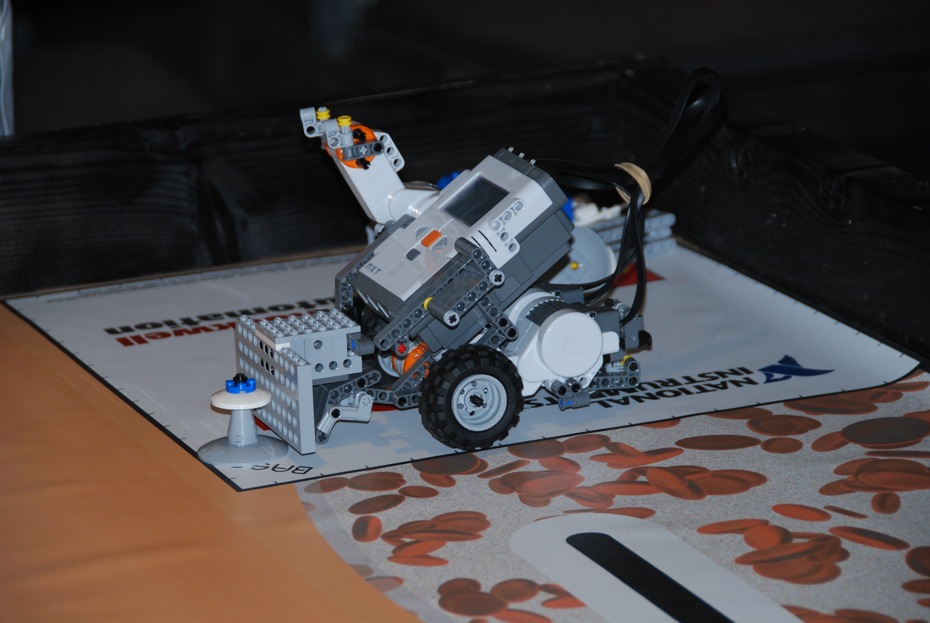
Last Saturday, over 90 Reading Middle and Elementary students participated in the third annual Reading Science and Engineering/First Lego Teams Competition.  This competition is based on the guidelines provided annually by First Lego League, a world wide organization that has been existence for the last 11 years.  Each year presents a different challenge to the students as they create both a Lego Mindstorms Engineering solution to a problem and give a presentation that focuses on that particular theme.  This year’s theme is called the 2010 Body Forward™ Challenge, where First Lego League teams will explore the cutting-edge world of Biomedical Engineering to discover innovative ways to repair injuries, overcome genetic predispositions, and maximize the body’s potential, with the intended purpose of leading happier and healthier lives.

The Reading competition is run entirely by volunteers with some logistical support from the Reading Public Schools.  Teams begin practicing in the fall for the competition.  This year, there were 13 teams, 90 students, and 32 coaches.  Seven of the 32 coaches were high school students who have a keen interest in physics, biomedicine, and engineering.

Each school is led by a volunteer coordinator who provides logistical support to the teams at that school.  Those coordinators are as follows:

Andrea Manning-Barrows

Kerry Lewis-Birch Meadow

Vito Politano at Killam

Kristin Kinsella-Wood End

Wendy Coughlin-Parker

Dianne Meyers-Coolidge

The entire Reading First Lego League organization is led by David Ventola, who started the program in Reading three years ago. 

Below are some pictures from last Saturday’s competition.  The Reading Public Schools is grateful for the support of this volunteer organization in providing this high quality STEM opportunity for our elementary and middle school students.

If you have any questions about the First Lego League, please contact David Ventola at dpventola@comcast.net.

The Snow Report

It should come as no surprise to anyone that we have had a very challenging winter.  The month of January has created havoc with our school schedules with four snow days, the most that we have had in several years.  Currently, we have not had a complete week of school in 2011 and we have two months of winter to go!

Over the last few weeks, I have received several questions about snow days, delays, the condition of our roofs, and the effect of snow days on the school calendar.  I would like to take this opportunity to answer some of those questions and clarify some misperceptions.  The bottom line in determining if school will be cancelled is if it is safe enough for students to get to school, remain safely in school, and then be dismissed in a safe manner.

1.  What factors do you take into account when you call off school?

It seems that each storm this winter has provided a different challenge as to whether or not school should be cancelled.   To determine if school will be cancelled, I collect a significant amount of data, beginning about 36 hours before the storm is ready to hit our area.  Some of the data I collect includes:

  • Hourly weather reports from a variety of sources including NOAA, the Weather Channel , and WBZ which gives me data on when the storm will hit, the amount per hour, how long it will last, and the type of snow (powdery, more heavy, mixed)
  • The timing of when the storm will start and end. 
  • Discussing road, sidewalk, and school parking lot conditions with the Reading Department of Public Works.  The DPW is in charge of plowing all parking lots, sidewalks, and roads adjacent to the schools.
  • Knowing when the DPW plows will be on the roads to begin plowing.  Contracted plow drivers are not always readily available and it sometimes takes about an hour for them to begin plowing once a “plowable” amount of snow is on the ground.
  • Discussing outside school conditions with the Director of Facilities.  The school department is in charge of snow removal adjacent to the school building, including walkways and stairs.
  • Talking to several local Superintendents to determine what they may do and the challenges that they are facing.
  • Talking to the Reading Police Department to discuss safety conditions on the roads
  • Determining if parents are able to get their children to school or are children able to walk to school.  Reading does not have a lot of school bus transportation, so this piece of data is critical.

Sometimes, the data that I have collected is so obvious that I can call a snow day the night before.  Unfortunately, because this is New England, weather forecasts can change and if there is any doubt, the decision needs to wait until the morning.

2.  When is a delay considered?

A delay is considered when a little more time is needed by the DPW and school custodial/maintenance staff to ensure that the parking lots and school areas are cleared or when families are still digging out and that extra hour or two would help getting children to school on time.  This was the case a few weeks ago when we had the one hour delay.  It seemed that families needed a little more time to “dig out”.  A delay counts as a school day.

3.  When is a release considered? 

A release is a very difficult call, particularly in a town like Reading which has very few busses.  Most of the time, it is safer to keep the students at school for the entire day where there is a regular routine and scheduled supervision and transportation at the end of the day, rather than let them go home early and take the risk of children not being able to get transportation home or access to their home.  I also have to take into account when the peak of the storm will hit the region.  For example, last week, the peak of the storm was in the middle of the school day and it lessened at the end of the school day.  On days like this, parents always have the option of dismissing their child early and we encourage that option if they feel that is best for their child and family situation.

4.  What counts as a school day?  Do we have to go until July?

According to the Department of Elementary and Secondary Education, the school calendar has to have a minimum of 180 school days and a minimum of 900 hours of instructional time for elementary students and 990 hours for middle/high school students.  Therefore, we have both a day requirement and an hour requirement that we must follow.  Currently, our last day of school is June 23 and all four of our built-in snow days have been used.  From this point forward, we will need to add a day for each snow day that we use.  Unfortunately, we cannot add hours to early release days to equal an additional day because those days already count as part of the 180 days.

There is also no state regulation as to the date when school needs to end.  Technically, if we continue to have additional snow days, the school year could be extended past June 30th.  Before we reach that point, we would attempt to identify alternative days in the calendar (i.e. vacations, holidays, Saturdays).

5.  What is the condition of our school roofs?

Over the last several days, we have taken a proactive approach on each roof by removing high snow drifts, clearing roof drains, and addressing other areas that could be a concern.  We have been using both our own custodial/maintenance staff, as well as, outside contractors to address these concerns. 

This weekend, we will continue to reduce the amount of snow on our roofs by using all available staff, hiring additional contractors, and using other support services.  We are aware of the weight bearing load for each school roof and we will make sure that enough snow will be removed to be well below those limits.  Our goal will not be to eliminate all of the snow on each roof, but to continue to make sure that all of our school roofs are safe.

While we are on the topic of snow, I want to put out a kudos to our custodial/maintenance staff, under the direction of Director of Facilities Joe Huggins and Assitant Director DJ Cacciapuotti  who have put in a significant amount of time over the last several days to address snow removal both during storms, as well as, on our roofs.

Let’s hope that Mother Nature has gotten the snow out of her system!

Summarizing the Showing of “Race to Nowhere”

As discussed in last week’s blog entry,  the Reading Public Schools hosted a showing of the documentary, Race to Nowhere, last Tuesday evening.  Over 400 parents, teachers, and students attended this viewing which highlighted the anxiety and strain that our students are under from today’s pressures and demands of society.  In the documentary, students, teachers, and parents from suburban communities all over the country talked candidly about topics such as the amount of homework assigned on a daily basis, the amount of curriculum that needs to be covered in an Advanced Placement course, the overscheduling of students, the accountability demands of No Child Left Behind, and the expectation for our students to always get into the “best colleges.” According to the documentary, this increasing pressure has led to an increase in students harming themselves, an increase in student depression, a genuine loss of the love for learning, an increase use of stimulants such as caffeine to stay awake, a lack of sleep, and increased hospitalization of students.  Recently, the Boston Globe, published an article describing the film and the follow-up discussion from an audience who saw the film in Harvard, Massachusetts.  In the article, similar topics were discussed.  One high school senior was quoted as saying, “the culture of anxiety is contagious.”

After the film, Wood End Elementary School teacher Joanne King facilitated a discussion with the audience about the film.  The 40 minute discussion focused on topics such as the purpose of homework, the amount of homework that is assigned to students, the pressure of mid-term exams, the overscheduling of students, the amount of memorization versus critical thinking that is expected in certain courses, and the expectation that everyone needs to get an A.

The showing of the film and the follow-up discussion are only the beginning of a community conversation.  The pros and cons of each topic should be and will be discussed to identify what is best for our students in Reading.  This growing problem is not just a school issue, but a community, parent and societal issue as well which will take a collaborative approach to solving.  The main question at hand is how do we create that healthy balance for our students?  At the end of the film, several suggestions were mentioned.  For parents, they are:

  • Reduce performance pressure.
  • Avoid over-scheduling.
  • Allow time for play, family, friends, downtime and sleep.
  • Ask your children how they are feeling.
  • Allow your children to make mistakes and learn from them.
  • Dialogue with your children about their experiences in school.
  • Know the signs of childhood depression. Follow your instincts.
  • Attend school board meetings and other venues where education is discussed and policies are established and reinforced.
  • Form alliances and organize other parents to join you. As a group, talk to your children’s teachers, school administrators, and attend School Board meetings.
  • Challenge accepted homework practices and policies and the imposition of state and national standards that have narrowed curriculum.

For teachers, the film suggested the following:

  • Become knowledgeable about research in the area of homework and the importance of play and downtime.
  • See what happens when you assign less homework.
  • Empower students with more voice and choice in the classroom.
  • Find opportunities to evaluate children aside from tests.
  • Share your voice on policies impacting education in your school community and at school board meetings.

Students were given suggestions such as:

  • Speak to the adults in your life about how you are feeling.
  • Make sure you get plenty of sleep.
  • Unplug and slow down.
  • Make time for things you enjoy.
  • Limit AP classes to subjects you enjoy.
  • Limit extra-curricular activities.
  • Seek colleges that use a comprehensive approach to looking at applicants.
  • Learn about the long-term impact of caffeine and performance-enhancing medications.

Finally, administrators were given the following suggestions:

  • Develop a “plan of action” to create a positive and healthy educational environment that supports the “whole child”.
  • Support “multiple pathways” in school integrating academics with career and technical education.
  • Consider a later start time for the school day in high school. 
  • Address sources of stress for children, educators and families.
  • Set expectations with faculty at the beginning of the year: ie. if homework takes longer than a set amount of time, child should not continue to the point of frustration and should not suffer any consequences at school.
  • Make sure that elementary school students have recess and older students time for lunch.
  • Consider the way your school recognizes students and include opportunities for a broad range of young people to be recognized.
  • Consider block schedules which reduce the number of transitions and contacts for students and teachers.
  • Re-think AP programs. Work closely with college admissions offices to share how your students are evaluated. 
  • Ensure that school websites are focused on school communications rather than grades.
  • Create calendars to reduce overlapping demands and establish guidelines for tests and projects immediately prior to or after holiday breaks.
  • Provide opportunities for open communications between teachers, parents and students.
  • Create a vision for change with the emphasis being on engaged learning rather than teaching to a test.

In addition, we have received numerous requests from students, parents, and teachers to have an additional showing of this documentary.  The initial showing and the admission fee that was charged was part of a contractual agreement that we had with Reel Link films, who produced the film.  We are currently exploring additional ways that we can give more of our community access to the documentary and continue the discussion.

For further information about this film, please go to the Race to Nowhere website.

See Race to Nowhere on Tuesday

On Tuesday, January 25, the Reading Public Schools will be sponsoring a showing of the documentary, Race to Nowhere, beginning at 7:00 p.m. in the Reading Memorial High School Fine and Performing Arts Center.  This documentary, which is being shown across the country discusses the anxiety and stress that our children are under in today’s society.  It looks at the culture of competition that has been created to be the best in everything that we do and how that mindset has put a toll on this generation of children.   The Washington Post  portrays the film “as a quiet counterpoint to the better-known “Waiting for ‘Superman,’ ” which focuses on failing urban schools. “Race to Nowhere” explores a different problem, the strains of competing in a pressure-packed academic culture that is highly test-driven and pushes some students to the edge.”

 The trailer is below.

Tickets are available online for $10 and at the night of the film showing for $15.  All ticket proceeds help to defray the cost of the film.  An open dialogue will follow the screening and all are welcome and encouraged to participate in the conversation as we build our community around our students.  For more information, resources, or to purchase tickets for this film please visit the website at www.racetonowhere.com

FY12 Budget Process Continues

This past week, the Reading School Committee held two meetings to discuss the Superintendent’s Budget.  On Monday evening, the School Committee heard the overview of the entire budget and a presentation on the administration cost center.  On Thursday evening, presentations were made on the Regular Day and Special Education budgets.  Several excellent questions were asked by the School Committee.  The answers to those questions are posted at the document located here

 The remaining budget meetings are as follows:


  • January 20-The School Committee will be discussing the Other (Health Services, Extra-curricular, Athletics, Technology) and Facilities/Maintenance cost centers.
  •  January 24-Public Hearing on FY12 Budget
  •  January 31-Final Vote on FY12 Budget

We encourage you to attend these meetings and participate in the budget process.

The information below gives you a brief picture of the FY12 budget.  We encourage you to review the entire Superintendent’s Recommended budget here.  If you have any questions during the process, please do not hesitate to contact the Superintendent’s office at 781-944-5800 or jdoherty@reading.k12.ma.us.

Town Revenue and Expenses

The majority of the town’s revenues, of course, come from the local property tax levy as well as excise taxes. State aid is a major source of revenue as are state and federal grants. Lesser amounts are received through local permits and fees. In Fiscal Year 2012, the town is predicting an increase of $1.2 million in local revenues but a decrease of $1.6 million in federal and state revenues for a net projected decrease of $0.4 million.

The majority of accommodated costs, with the exception of energy and utilities, and special education tuitions are also projected to increase and, unfortunately, at a rate that outpaces the growth in revenue. Health insurance rates are projected to increase 7% with enrollment growth requiring an additional 3% increase in funding.

As a result of this shortfall, the town’s Finance Committee is recommending the use of up to $1.5 million from cash reserves to help stabilize the fiscal year 2012 budget. Even with this infusion of free cash, the remaining non-accommodated budgets appear to require a 0.5% reduction in order to balance. For the school department, that translates to a $385,485 reduction below the FY2011 budget.

School Department Budget Challenges

The school department faces a number of budget challenges in the upcoming year. Employee salaries comprise over 77% of the school’s budget. All of the school department’s collective bargaining agreements are due to expire at the close of the current school year and negotiations for successor agreements have only just begun. In addition to the expiration of collective bargaining agreements, contracts for transportation (regular education, athletics, and extracurricular buses) and substitute teachers are also expiring. Also, photocopier leases will need to be re-negotiated prior to the start of the next school year as well. There will also be curriculum needs as well that will focus on the implementation of the new anti-bullying law and the transition of our curriculum from the current Massachusetts State Frameworks to the new Common Core of Learning.

As mentioned earlier, the two bright spots on the FY2012 horizon are special education tuition costs and energy expenditures. Special education tuitions are anticipated to decrease slightly next year as a result of the transition of students out of some of the more costly placements. Decreases of over 10% in energy consumption are anticipated as a result of the extensive investment that the community has made in energy conservation measures throughout all school and town buildings. Furthermore, due to excess natural gas reserves brought about by new gas recovery technologies brought on-line over the last two years, natural gas prices are also on the decline. Our current natural gas contract is due to expire at the end of October 2011 and we are anticipating gas prices will be 20% below what we are currently paying.

Despite the cost savings in these two areas, however, the increase needed to fund a level service budget is projected to be just over $1.0 million. A level service budget would allow the school department to provide the same level of services to our students as we are providing in the current school year. It would allow us to maintain the staffing that is currently funded through the soon-to-expire federal stimulus grants as well as other federal grants that are projected to be reduced in the next fiscal year or which are not anticipated to increase sufficiently to pay higher salary costs. In total, this translates to 8.5 FTE employees. Also included in the level service budget is the addition of 2.8 special education teaching staff to ensure that current caseloads for existing staff do not increase and that the needs of a rapidly increasing population of students suffering from social and emotional disabilities are adequately addressed.

Fulfilling the needs of the school department given the available resources of the community will be very difficult in fiscal year 2012. Already, over the past several years, the gap between per pupil spending in Reading and the state average spending has been widening as the chart below indicates. That gap has increased from $1,162 per pupil in FY07 to $1,936 per pupil in FY10, a gap of $774 per pupil or 7.3% of our total per pupil amount. If the school budget were to be level funded or decrease in FY2012, this gap would likely increase even further. 
 
 
 Superintendent’s Recommended Budget
 
The Superintendent’s Recommended budget contains three different budget scenarios for FY12, a level services budget, a level funded budget, and a -.5% reduction budget.  The level services budget would require an increase of 2.7% over fiscal year 2011 or just over $1,000,000.  This scenario is the least likely given the current budget picture.  The level funded budget requests the same total appropriation as that received for fiscal year 2011 or $36,390,308. This again may not be a realistic scenario.  Finally, the -.5% reduction budget is a budget that is being developed by both Town and Schools at the request of the Reading Finance Committee.  This budget will be $385,000 less than we are currently spending in FY11.
 
In summary, in order to reach a level funded budget, the following reductions would need to be made from a level service budget:


  • Increase Offsets by $125,000
  • Reduce School Supply & Material Budgets by $100,000
  • Eliminate 1.5 Support Staff Positions at a cost of $50,000
  • Reduce Administrator Salaries by $20,000
  • Eliminate After School Fitness Center at a cost of $20,000
  • Reduce Salary Increases at a cost of $685,000  

This level funded budget represents a $1,000,000 reduction from the level service budget.  If further reductions were necessary to get from the Level Funded Budget to a -0.5% Budget, additional cuts totaling just over $385,000 would need to be made. The proposed cuts to get to this reduced level of funding would include:


  •  Eliminate K-8 Instructional Specialist position at a cost of $ 50,000
  • Reduce athletic expenses and/or increase user fees by $ 40,000
  • Eliminate 6.3 FTE support staff positions at a cost of $120,000
  • Eliminate 3.7 FTE teaching positions at a cost of $175,000


These reductions would have a significant impact on our students including elimination of athletics programs (e.g., elimination of freshman sports), reduced instructional support in classrooms, and an increase in class size, most likely in grades 3-5 and course sections in grades 9-12. The 3.7 FTE reductions in teaching positions may increase or decrease based upon kindergarten enrollment, which will become more solidified by early spring. We are currently assuming the same kindergarten staffing levels as FY11.


Superintendent’s FY12 Budget Message

Beginning on Monday evening, the Reading School Committee and the Community will begin to hear presentations on the Superintendent’s Recommended Budget for FY12.  A copy of the budget is located here.  The School Committee will be discussing the budget over several nights.  These meetings will consist of hearing presentations on the various cost centers, followed by deliberations and questions about each cost center.  There will also be a public hearing on January 24 which will give the public the opportunity to discuss any aspect of the budget. 

We encourage and welcome the public to attend these meetings.  All meetings will begin at 7:30 p.m. and be held at the Reading Public Schools District Office, located at Reading Memorial High School near the RISE Pre-School.  The dates are as follows:

  • January 10-Overview and Administration Cost Center
  • January 13-Regular Day and Special Education Cost Center
  • January 20-Health Services, Athletics, Extra-Curricular, Technology and Maintenance
  • January 24-Public Hearing on FY12 Budget
  • January 31-School Committee Final Vote on FY12 Budget


As we approach fiscal year 2012, all indications show that public education in this country is at a critical crossroads. Cities and towns across the country struggle to find the revenues necessary to maintain core services including public education. While some believe that the deepest recession to have hit this country is nearing an end, federal and state revenues have been slow to recover and, therefore, resources are still significantly constrained. Districts across the country are struggling to find ways to better prepare our children for this ever-flattening global society that defines our world today. As a result of this struggle, it is no surprise that words like innovation and restructuring are now being used to describe what is needed in public education as we progress further into this 21st century.

The Commonwealth of Massachusetts is expected to face a $1.5 to $2.5 billion structural deficit next year. The federal stimulus funding that has been used to prop up falling state revenues is now expended and the proverbial funding cliff that federal officials warned us about in fiscal year 2009 lies ahead. The evaporation of this one-time revenue is expected to result in drastic cuts to the state budget and, while educational funding has been largely spared over the past two years, there are limited areas of the state budget to be cut and most agree that Chapter 70 funds will be reduced by 7% to 10% for fiscal year 2012. For Reading, that translates to a reduction of nearly one million dollars in education funding. With health insurance and other fixed costs rising, less local revenue is available for core services as well.

The challenge for our community and our school district will be to find ways to maintain the high quality services that our residents expect from the Town of Reading and Reading Public Schools. One of the primary responsibilities of the Superintendent is to develop a recommended budget request each year that represents what is necessary to provide a high quality educational experience for our children. In prosperous times, that budget would reflect the resources necessary to accomplish all of the district and school improvement goals aimed at maximizing student success for all students. In difficult times, the challenge is balancing what is necessary for achieving success with what is available.

Student performance has remained strong despite two years of little to no growth in funding for our schools. The school district has lost 28 positions in the last two years and, for the most part, we have been able to keep the impact away from the classroom as much as possible. However, our schools are feeling the strains of reduced staffing and reduced funding for materials, professional development, and technology. Fortunately, federal stimulus funding has helped to reduce that impact but that funding is nearing an end. But the real reason for our continued success in light of limited funding is the commitment of our staff to our students and our mission and the strong support of our parents and community organizations.

Most agree that surviving fiscal year 2012 will be a challenge but many are also optimistic about the future. This Fiscal Year 2012 Superintendent’s Recommended Budget was developed in consideration of the challenge but also of the optimism for the future. The Level Service budget helps us to understand what would be required in order to maintain the same level of high quality services we are currently providing to our students. To do so would require $1.0 million in additional funding from FY11 levels. We are confident that maintaining current services would allow our district to continue to foster the same level of student success we have seen in the past several years. Recognizing the optimism for the future, however, it is crucial that we do not dismantle the core structures that have led to our past successes. History shows that it takes years of re-building once those core structures are eliminated.

Recognizing that funding will be constrained in the next fiscal year, we have also developed a Level Funded budget that shows what cuts would need to be made should we face a third year of little to no funding increase. Projecting some of our major expenses for fiscal year 2012 is challenging at this point in the year as many of our contracts, including our five collective bargaining agreements, expire at the close of this year. We have tried to incorporate realistic assumptions to ensure that the funding that is available is able to fund core instructional services. In addition, we will look to shift some of our instructional expenses to the EduJobs funding being mindful that using non-recurring funds for recurring expenses is not sustainable.

While it will be a few months before we know for certain what level of state aid we will receive and what the increases in some of our major costs such as health insurance will be, the town’s revenue projections suggest that even level funding of budgets may not be possible in fiscal year 2012. In response to this possibility, we have also developed a list of reductions that would be necessary in the event that budgets would need to be cut by an additional 0.5% below fiscal year 2011 levels. This .5% reduction budget is the budget level that has been advised by the Reading Finance Committee. These cuts are far more costly to our district than those required to get to level funding. If budgets were reduced by 0.5% from fiscal year 2011 levels, for example, we would have to eliminate an additional $385,485 from our budgets; that is in addition to the $1 million that would be cut to get from level services to level funding. Those cuts would require significant personnel cuts and would result in less instructional support in our classrooms, higher class sizes across the district, and reductions to athletic programs. While we are hopeful that the revenue and expense pictures will improve and not require such reductions, we are prepared to implement the innovation and restructuring necessary to maintain our academic excellence.

As we developed the level funded and -0.5% reduced budgets, the priorities listed below were used to guide our decisions. As we developed these less than optimal budgets, it was our overarching goal to preserve the integrity, stability, quality, and culture of our school district. This priority list, which is in no particular order, was developed with input from administrators, directors, and feedback received during the Superintendent’s transition sessions with the community. These priorities provided the guidance necessary to make decisions which will sustain the core educational services necessary to continue to move our school district forward during these difficult economic times.

FY12 Budget Priority List (in no particular order)  

  • Protect low class sizes (18-22) in grades K-2 where possible
  • Preserve the middle school interdisciplinary model
  • Continue to support 21st Century learning initiatives throughout the district
  • Sustain our PreK-12 technology infrastructure
  • Maintain our school facilities while controlling the long term cost of operating those facilities
  • Avoid elimination of any regular day programs (e.g. art, music, physical education, foreign language, etc.)

We will continue to use this blog and other venues to update you on the FY12 budget.  If you have any questions or comments about the budget, please do not hesitate to contact the Superintendent’s Office at 781-944-5800, attend the School Committee Meetings, or email the Superintendent directly at jdoherty@reading.k12.ma.us.